

Press release
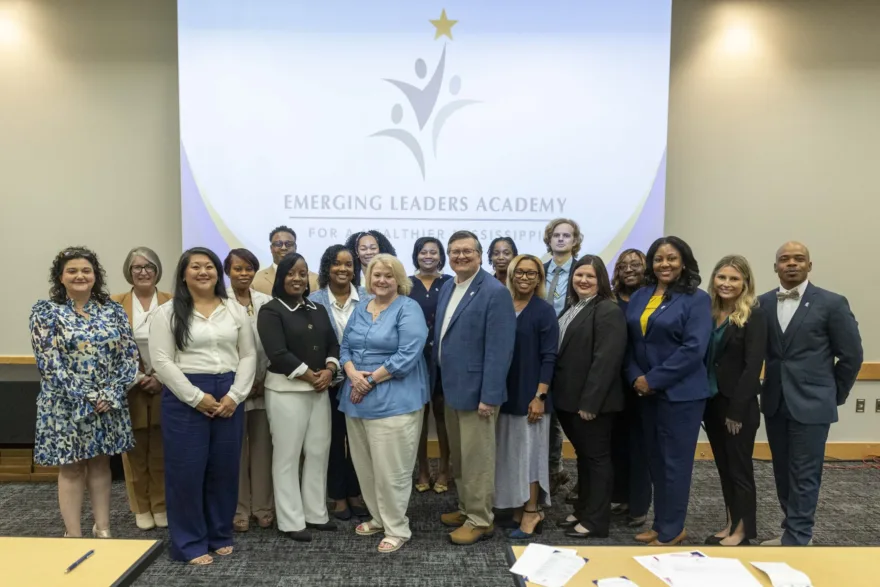
Whether they are responding to an emergency or planning for long-term population health, health departments need strong and stable leadership to protect communities from disease and disasters, build healthy communities, and keep essential services running when they’re needed most. The Mississippi State Department of Health (MSDH) knew that preparing for tomorrow’s health threats and challenges meant investing in its staff today. In 2024, the department teamed up with the Region 4 Public Health Infrastructure Grant (PHIG) Hub, the Mississippi Public Health Institute (MSPHI), to create the Emerging Leaders Academy (ELA). The Academy’s first cohort brought together 20 high-potential staff from across the health department and equipped them with the skills, confidence, and strategic mindset needed to lead effectively.
Building Leaders from Within
The nine-month training program was modeled after leadership development approaches often seen in high-performing businesses. Participants completed professional assessments, such as the Birkman Emotional Intelligence assessment, to better understand how they communicate and interact with others, and built skills in executive engagement, cross-functional collaboration, project management, trust-building, conflict management, and promoting psychological safety and well-being. Participants were able to apply what they were learning in real time, as they selected capstone projects to tackle real-world challenges, worked in teams to develop solutions, and presented their ideas directly to MSDH’s executive leadership. The capstone projects addressed complex topics, including:
- WIC (Women, Infants and Children) program participation rates have declined in Mississippi. ELA participants worked together to think of modern and creative approaches to engage young parents and increase WIC participation rates.
- Rates of prenatal engagement in Mississippi are low. MSDH leaders focused on using evidence-based public health approaches to increase the amount of expecting parents receiving prenatal care.
- The Medical Reserve Corps (MRC) is a national network of volunteers, organized in about 800 units to improve the health and safety of their communities. The MRC recruits, trains, and activates volunteers to respond to community health and safety needs. Thus far, MRC units in MS have only been used as part of emergency response. MSDH used the Academy to explore ways to expand the role of MRCs. For example, MRCs could deliver prevention-focused programs and services to address ongoing health threats, including diabetes and suicide.
- MSDH uses procurement processes that can be administratively burdensome, and staff and partners do not have a good understanding of contracting requirements. ELA participants worked to resolve pain points related to contracting, procurement, and compliance.