Inhalation Toxicology Research
Chemical Insights has published a significant volume of research on the health effects of vaping, harm reduction strategies and evaluations of safety risks.
UL Research Institutes’ Chemical Insights is on the frontlines of research on emerging environmental health threats facing people and the planet today. Our work lets people around the world know what chemicals are in the air we breathe, the water we drink, and the products we interact with every day. Our leadership role is to provide objective research and resulting knowledge for improved practices, innovative product design, and changes that enable safer products and healthier environments.
We partner with world-class institutions to broaden the scope and impact of our health and safety science research, ensuring diverse and novel approaches to scientific challenges including:
We partner with the best minds in various industries to help disseminate our safety science to the public, achieving real-world impact including:
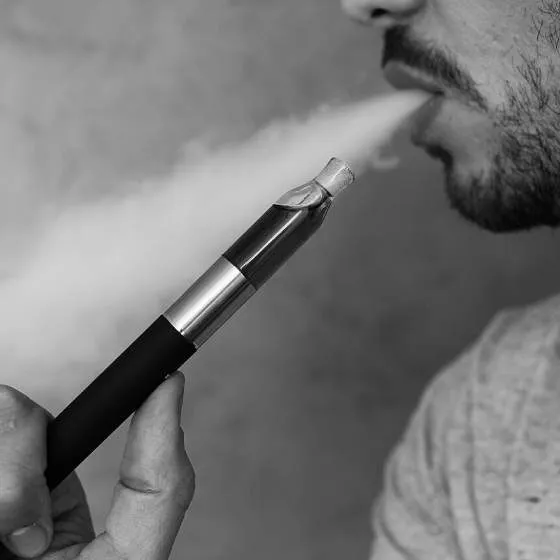
Chemical Insights has published a significant volume of research on the health effects of vaping, harm reduction strategies and evaluations of safety risks.
UL Research Institutes’ Chemical Insights is a leading independent safety science organization with global reach. We advance our mission — working for a safer world — by conducting rigorous, unbiased research that identifies emerging risks and delivers science-driven solutions.
Since 1894, we’ve helped shape a safer future by uncovering risks to people and the planet. Today, our work focuses on three urgent priorities: building resilience for a sustainable future, advancing individual and societal health, and promoting safety at the human-digital interface.
UL Research Institutes’ Chemical Insights is dedicated to scientific research, publication, education, and outreach on environmental exposures resulting from technologies and practices, their impact on human health, and strategies for reducing health risks.
Chemical Insights houses four Centers with specialized laboratories to bring a full suite of exposure science, computational and environmental toxicology, and analytical chemistry approaches in pursuit of thoroughly investigating some of today’s most challenging problems. Some areas of research include:
Our work informs people about the chemicals present in the air we breathe, the water we drink, and the products we interact with on a daily basis. We strive to provide objective research and resulting knowledge for improved practices, innovative product design, and changes that enable safer consumer goods and healthier environments.
Our scientists develop rapid, integrated approaches for human health toxicity assessment to fill information gaps for data-poor chemicals, including computational models as well as laboratory-based high-throughput screens to estimate safe exposure levels and identify the biological processes potentially disrupted by these chemicals.
Our scientists utilize specialized exposure chambers and field sampling equipment to measure pollutants from consumer products, building materials, and environmental samples to examine potential exposure pathways. We then provide quantitative and qualitative determination of elemental and molecular species from a variety of environmental matrices using a suite of state-of-the-art analytical instrumentation.
Our scientists and developers build online software tools that make all the chemical safety data collected by Chemical Insights available to the public and offer the ability to combine the information in specific ways to support different safety-related decisions.
Our scientists employ a wide range of advanced instrumentation to assess the health risks from consumer products, characterize the health impacts from high-risk exposure events, and evaluate the origins of disease.