Network Impact Award
Missouri Public Health Institute’s statewide initiative to eliminate congenital syphilis.
The NNPHI Awards Program recognizes outstanding individuals and organizations improving the public’s health and embodying NNPHI’s mission and values.
The NNPHI Awards Program recognizes outstanding individuals and organizations that make exemplary contributions to improving the public’s health and embody NNPHI’s mission and values. NNPHI’s mission is to support national public health system initiatives and strengthen public health institutes to promote multi-sector initiatives resulting in measurable improvements of public health structures, systems, and outcomes.
2026 is a special year as NNPHI is celebrating 25 years of impact on public health systems structures and outcomes. This year’s stellar award winners exemplify the impact the network and its partners have had on local communities, statewide infrastructure and national reach.
NNPHI’s Annual Conference provides crucial opportunities for our network members, partners, and the public health ecosystem more broadly to connect, learn from colleagues, develop skills, and gain actionable takeaways that they can implement in their communities. Our award recipients embody these values and exemplify outstanding and innovative work, leadership in public health, and devotion to a healthier and more equitable world. Please join us in celebrating their achievements!
Join the nation's only public health conference dedicated to the health systems improvement driven by public health institutes.
Missouri Public Health Institute’s statewide initiative to eliminate congenital syphilis.
The Missouri Public Health Institute’s statewide initiative to eliminate congenital syphilis is this year’s recipient of the 2026 NNPHI Network Member Impact Award. The Network Member Impact Award is bestowed on a network member that has worked effectively in partnership to accomplish a measurable impact in the region, state, or locality. “The Missouri Public Health Institute (MOPHI), in partnership with the Missouri Department of Health and Senior Services (DHSS), leads a multi-year, statewide initiative to eliminate congenital syphilis, one of Missouri’s most urgent and preventable public health crises. This work began in 2023 and continues through 2025, bringing together more than 150 stakeholders across clinical care, epidemiology, local public health agencies (LPHAs), state leadership, and community partners. Through dozens of convenings, data reviews, and cross-sector work sessions, MOPHI helped Missouri build a unified statewide approach rooted in best practices from CDC, national STI prevention partners, and leading academic institutions. While this is a multi-year initiative, the partnership has already produced measurable improvements:
By combining evidence-based practice with deep collaboration, this initiative is redesigning how Missouri prevents congenital syphilis—from faster detection and more consistent treatment to stronger surveillance, cross-sector coordination, and community-centered outreach.
American Heart Association’s Spoken Word Poetry.

The American Heart Association (AHA) is this year’s recipient of the Public Health Innovation Award. The Public Health Innovation Award is bestowed on an organization or individual who took a risk and developed an out-of-the-box solution or created a unique partnership resulting in new approaches, scalable ideas, and new ways of working together. The American Heart Association has redefined public health communication by harnessing the power of spoken word poetry to confront the tobacco industry’s targeting of African Americans and other communities of color. Partnering with acclaimed artist Ryon Everidge, AHA created three original spoken word pieces that break through traditional silos, bridging art and health advocacy in ways that resonate across communities, policymakers, and grassroots leaders.
Pieces such as “I Already Know” and “What Would They Say?” challenge entrenched narratives and expose systemic inequities, sparking collaboration among educators, healthcare providers, and advocacy groups. By embedding storytelling into health campaigns, this initiative transforms technical messaging into emotionally accessible, culturally relevant calls to action—messages powerful enough to influence policy change in states and cities nationwide. These spoken word pieces have not only raised awareness but have been actively used in campaigns across the Country that led to concrete legislative victories. For example:
This initiative exemplifies how spoken word poetry can be more than inspiration—it can be a policy tool, a community bridge, and a catalyst for health equity. By embedding storytelling into advocacy, the American Heart Association has created a model of public health innovation that is both culturally resonant and strategically effective.
Puerto Rico Public Health Institute’s CRESe Project.

The Strengthening the Public Health System Award is bestowed on a project team that has implemented a successful initiative that strengthens the public health system. Please join us in celebrating Puerto Rico Public Health Institute’s CRESe Project, Drought-Resilient Communities initiative. The CRESe project is a collaboration between the PRPHI, North Carolina State University, Interamerican University of Puerto Rico, and multiple other collaborators. The primary audience of the CRESe project includes rural communities in Puerto Rico that rely on small, community-managed water systems, groups that are highly vulnerable to drought, climate change, and limited public health infrastructure. The project specifically targets community aqueduct leaders, local operators, and residents who depend on these systems for safe and reliable water access. In addition, municipal stakeholders and public health partners benefit from the project’s tools and strategies, which strengthen coordination and preparedness at the local level.
As an initiative led by a public health institute, the project’s impact extends beyond individual communities to address systemic gaps in environmental health resilience. CRESe leverages the institute’s technical expertise, research capacity, and community engagement framework to deliver culturally grounded, evidence-based resources that directly enhance local public health systems. This unique positioning allows the project to translate public health science into actionable tools that empower communities and support long-term climate resilience across Puerto Rico.
Oregon Public Health Institute and Public Health Institute (California) collaboration on an EMS Buprenorphine roadmap in Oregon.
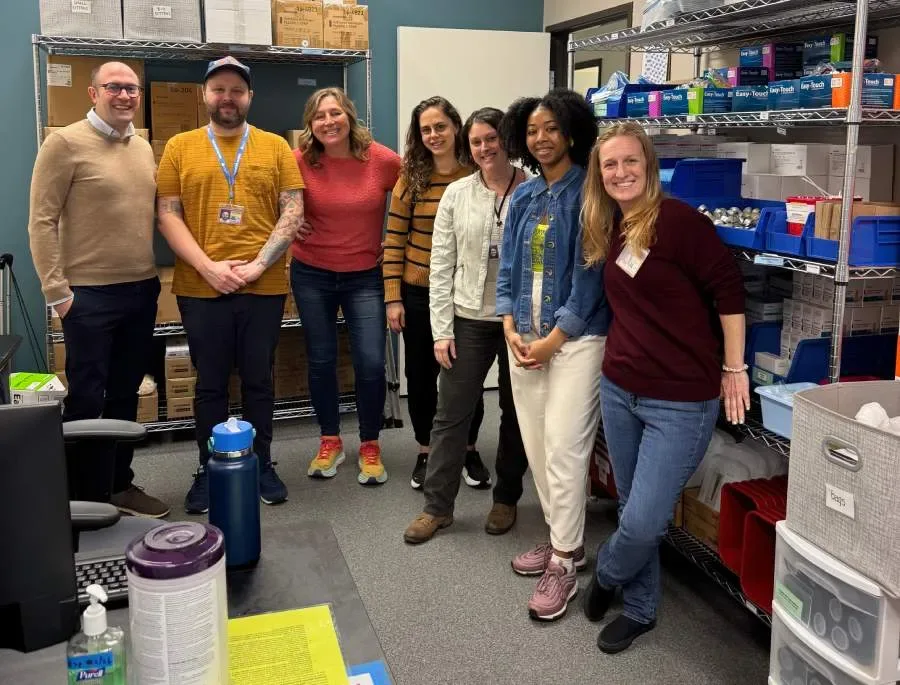
New in 2026, the Outstanding Collaboration Award is celebrating collaboration among NNPHI members. At a time when resources are scarce and competition is high, this award recognizes pairs or group of members that collaborated together, sharing resources and expertise, on an impactful project that advances community health. This year we are celebrating the collaboration between the Oregon Public Health Institute (OPHI) & Public Health Institute’s Bridge Center (Bridge) to launch an EMS Buprenorphine roadmap in Oregon. The roadmap includes evidence, operational steps, coordination strategies, and advocacy guidance. OPHI and Bridge co-developed this project with their funder partners at the Oregon Health Authority, who had followed Bridge’s work in other states and wanted to pilot an EMS buprenorphine program in Oregon. Oregon knew the Bridge team would bring the experience and expertise needed, and that OPHI could offer connections to local partners, navigation of Oregon’s behavioral health and public health systems, and strategic guidance on getting good work done fast and efficiently in Oregon. OPHI and Bridge leadership collaborated on all program design and project management, and partnered with local EMS agencies, emergency clinicians, and local buprenorphine champions to implement our pilot trainings, workgroups, and partner convenings.
Under the EMS Bridge model, eligible patients are treated with buprenorphine from the ambulance. Paramedics use motivational interviewing to engage patients and encourage them to be seen at a nearby Emergency Department that treats opioid use disorder. Results include:
For an earlier story of impact of the Bridge program in California, see: How PHI’s CA Bridge is Pioneering Emergency Department Addiction Care – Public Health Institute.
Emiliano Figueroa Torres Community Center and Puerto Rico Public Health Institute collaboration on the Caribbean All Hazards Project to Build Resilience Against Climate Effects.
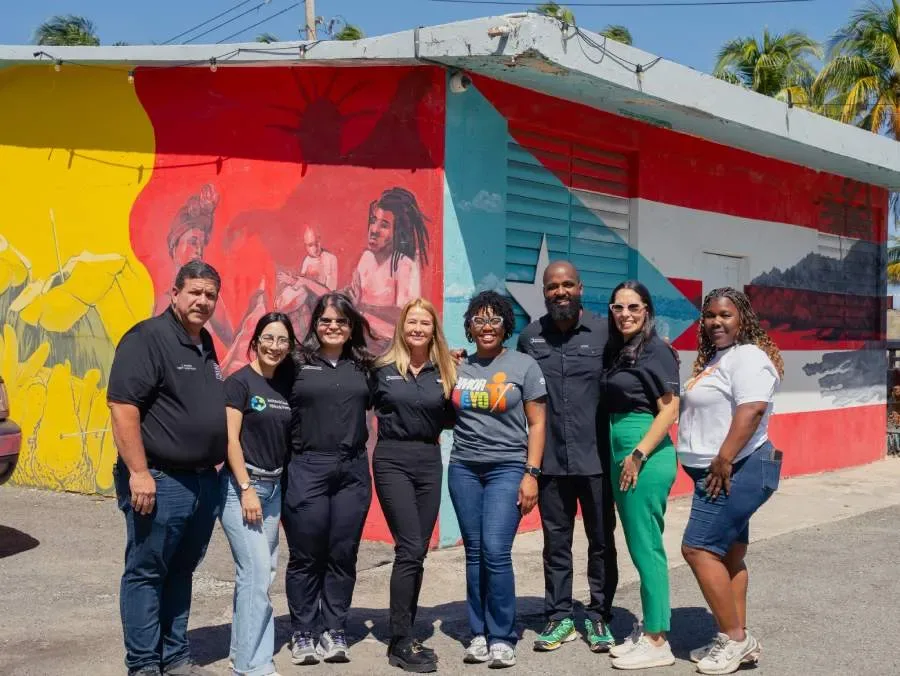
Emiliano Figueroa Torres Community Center & Puerto Rico Public Health Institute is this year’s recipient of the 2026 NNPHI Health and Racial Equity Partnership Award. The Health and Racial Equity Partnership Award is bestowed on a network member and a community-based organization that together has taken courageous action in addressing the impacts of structural inequities. The Caribbean All Hazards Project to Build Resilience Against Climate Effects (CAPBRACE) used existing data from the CDC Social Vulnerability Index, the U.S. Census Resilience Tool, and the Fifth National Climate Assessment to identify communities with the greatest need and establish a baseline.
This impactful partnership serves the Torrecilla Baja (Piñones) community in Loíza, an Afro-Caribbean neighborhood that residents describe as “an island within an island,” marked by high CDC Social Vulnerability Index scores, limited infrastructure, chronic water insecurity, a single access road, and historically fewer resources than the rest of the municipality despite its geographic isolation. Using a Community-Based Participatory Research (CBPR) approach, the team worked closely with CDC, the mayor of Loíza, and community leaders to ensure all decisions reflected local priorities. Trust-building and racial and health equity were central to the process, led by a Community Health Worker from the neighborhood who ensured meaningful engagement with marginalized residents, including older adults, people with disabilities, low-income households, and Black/Afro-Caribbean families.
Through a Photovoice process, residents documented vulnerabilities and strengths, co-interpreted the results, and identified 15 priority needs such as drainage improvements, first-aid capacity, debris removal, water access, and waste management. The team completed Household Emergency Preparedness Plans that incorporated heat-risk guidance (reviewed by NWS and CDC) and made them accessible through audio descriptions and sign language, along with distributing essential preparedness materials at both the household and community levels. Collectively, these data have supported Torrecilla Baja in organizing its emergency preparedness and response strategies and in advocating for improved waste management services and expanded access to emergency medical services.
Danielle Lagana, public health analyst and community facilitator, Mohave County Department of Public Health.

This year’s NNPHI Unsung Grassroots Hero Award goes to Danielle Lagana for her impactful work as a public health analyst and community facilitator for the Mohave County Department of Public Health. Danielle (Dani) Lagana works entirely at the grassroots level, building relationships, coordinating partners, and elevating the voices of rural residents who are often overlooked in statewide planning processes. Her role centers on listening, connecting, and creating pathways for community investment, not directing policy from the top down. Her work is hands-on, trust-centered, and deeply embedded in the daily realities of the communities she serves. One of the clearest examples of Dani’s inclusive leadership emerged during her work in the northern Arizona border region, an area with a long and complex history of trauma and deep distrust of government agencies. When asked to facilitate community focus groups there, Dani didn’t walk in with a script or assumptions. She spent time building rapport with residents, learning their history, and honoring the fact that they often do not see themselves as part of traditional “city” structures.
During the first gathering, attendees arrived hesitant, arms crossed, unsure of why they had been asked to participate yet again. Dani opened the space with a simple acknowledgment: that their perspectives had too often been overlooked, and that she was there to listen, not to convince, correct, or defend. That moment shifted the room. People began to share openly about barriers to care, transportation challenges, cultural identity, and the feeling of being forgotten by larger systems. By the end of the session, residents who initially stood near the door were pulling up chairs, asking when they could meet again.
Dani also created and led a “Rural Street Team” that now travels monthly to provide on-the-spot services in all of Mohave County. This initiative exists because Dani created a space where everyone felt welcome, answered the call when residents said, “no one cares about us”. Her work continues to shape a culture across the county that prioritizes belonging, partnership, and community-driven change.
Allie Bodin, health data analytics and informatics manager, Missouri Public Health Institute.

The Rising Star Award is bestowed on a promising new leader who embodies the spirit of NNPHI’s mission. This year’s recipient, Allie Bodin, approaches complex public health challenges with a rare combination of analytical skill, humility, and deep ethical grounding. Allie consistently brings clarity, structure, and compassion to issues that require both technical rigor and community sensitivity. As the Health Data Analytics and Informatics Manager at the Missouri Public Health Institute, Allie plays a central role in strengthening Missouri’s public health systems through data-driven, equity-centered practice. She leads statewide initiatives that translate complex data into actionable strategies, guiding partners through ethical data governance, accessible visualization, and evidence-based decision-making.
Allie’s work embodies the spirit of NNPHI’s mission in both scale and impact. She strengthens multi-sector collaboration through the Data Learning Collaborative, a statewide forum she facilitates to connect practitioners across local public health agencies, state partners, academia, and community organizations. Under her leadership, this collaborative has informed Missouri’s approach to data disaggregation, rural health equity, and a new statewide data-sharing agreement, directly improving the structures and systems that support public health practice.
Her leadership on Missouri’s syphilis elimination initiative demonstrates measurable, statewide outcomes. Allie developed the comprehensive elimination plan, outbreak response strategies, and governance structures that brought together clinicians, epidemiologists, public health agencies, and community partners. This work has already contributed to Missouri’s first decrease in syphilis cases in years and helped MOPHI advance legislation expanding STI testing for pregnant people and partners.
In every aspect of her role, Allie models the forward-looking, systems-focused leadership NNPHI seeks to elevate – collaborative, ethical, equity-driven, and deeply committed to improving public health outcomes for all communities.
Erin Marziale, Senior Director of Network Engagement, NNPHI.

The Joseph Kimbrell award is bestowed upon an individual within the NNPHI family who has made extraordinary contributions to the network. The award honors Mr. Kimbrell’s legacy as a principal founder of the network whose passion for and commitment to supporting multi-sector innovations to improve the public’s health serves as the cornerstone for continued network accomplishments.
This year’s recipient, Erin Marziale, serves as NNPHI’s Senior Director for Network Engagement. Erin has been with NNPHI for 19 years. NNPHI has grown significantly through Erin’s leadership, both in the number of institutes as well as the number and reach of national programs NNPHI leads. Erin has been a key leader in the development of many public health institutes, including but not limited to Seven Directions, A Center for Indigenous Public Health; New Jersey Center for Health Equity & Wellbeing; Missouri Public Health Institute; and Montana Public Health Institute, among many others. Early in Erin’s tenure at NNPHI, she helped coordinate funding and technical assistance through the Fostering Emerging Institutes program, funded by Robert Wood Johnson Foundation which greatly accelerated the growth of the network. Later, Erin led NNPHI’s engagement with local conversion foundations to support the development of additional public health institutes.
Erin’s institute development work positioned NNPHI for supporting cooperative agreement projects with CDC, as well as the current Public Health Infrastructure Grant, NCTOH convening, and many other programs of national significance. Erin has also supported peer mentorship and learning across the network, encouraging a culture of collaboration and collective support. Erin’s values and constant attention to network members have led to a strengthened public health system and advancement of NNPHI’s mission.
