
NNPHI news
Missouri Department of Health and Senior Services and the City of Milwaukee Health Departments leverage Public Health Infrastructure Grant (PHIG) technical assistance to create customized workforce development plans aligned with Core Competencies for Public Health.
To deliver essential public health services well, health departments need staff equipped with the right skills and training for their roles. The Missouri Department of Health and Senior Services (MDHSS) and the City of Milwaukee Health Department (MHD) leveraged PHIG technical assistance to develop comprehensive workforce development plans that will empower their staff to serve their communities effectively and efficiently. These plans prioritize organizational goals, reflect employee needs and preferences, and adhere to the Core Competencies for Public Health Professionals. Workforce development plans not only allow any health departments to meet accreditation requirements, these plans will help MDHSS and MHD create a supportive work environment, improve employee retention, and maximize their investment in staff training.
While both health departments engaged with Public Health Foundation via requests through the PHIG technical assistance portal known as PHIVE, each department had specific goals: MDHSS sought to create a robust 5-year workforce development plan as part of their public health re-accreditation process, while MHD requested help creating a plan to support a diverse, representative, and anti-racist workforce.
Technical Assistance from Public Health Foundation
Public Health Foundation, a PHIG technical assistance provider and the organization responsible for the Core Competencies, worked side-by-side with MDHSS and MHD to:
- Sort jobs into key categories: PHF helped the health departments review all roles within the health department, identify those requiring similar skills, and categorize those jobs into six groups based on shared skill sets.
- Engage staff to prioritize competencies: Given that there are 56 Core Competencies spread across 8 domains, prioritization is necessary to create a realistic and time-bound plan. PHF supported health departments in facilitating virtual workshops with representatives from each job category to define and discuss the competencies. Staff representatives then used a voting process to prioritize the most essential competencies for their roles.
- Assess staff competencies & training preferences: PHF created competency assessments for all staff based on the prioritized list of competencies identified in step 2. This assessment not only gauged proficiency but also gathered preferences for training types and formats.
- Create a plan: PHF worked with health departments to synthesize all of this data into a workforce development plan that describes the types of training that employees need to be as effective as possible in their roles. PHF also provided guidance and recommendations on how to best implement and evaluate planned strategies and activities.
For most health departments, this process takes 3-6 months, and with PHF’s help, often requires only a few hours per week of time commitment from health department staff.
Key Outcomes
Missouri Department of Health and Senior Services
MDHSS’s plan reflects 3 main priorities, which emerged through the assessment and prioritization process:
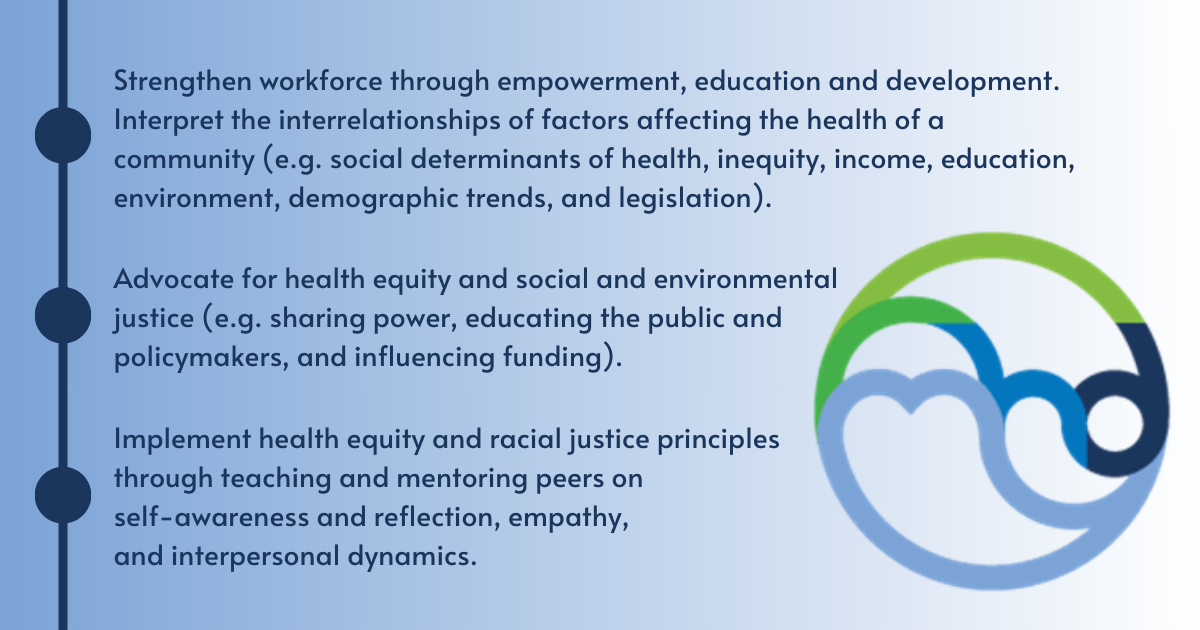
- Strengthen the workforce through empowerment, education and development.
- Ensure a competent workforce, with a focus on increasing skills around core competencies and expanding training on foundational public health services and health equity.
- Position DHSS as a destination employer through targeted recruitment strategies and instilling a sense of belonging, providing consistent onboarding experiences, and enhancing role clarity.
MDHSS’s plan is marked by ongoing communication with new and existing staff using a variety of channels and strategies, including an intranet site devoted to workforce development, monthly town halls, and a focus on the plan and overall workforce development during new staff orientations.